

With the Honourable François-Philippe Champagne, Minister of Innovation, Science and Industry moderating his first public event with the Canadian Space Agency, the virtually assembled media witnessed his enthusiasm for space for the first time. And as the press conference unfolded he announced the next investment in Canada’s lunar program, a bet on computer technology and AI software that will be used in lunar orbit and on the surface of the Moon.

Mission Control Space Services technology is heading to the Moon in 2022
The big news at the event was the awarding of $3 million to Mission Control Space Services (Mission Control) for the company to advance its computer technology and AI software.
Mission Control “will look to demonstrate the capabilities of their new navigation and computing technologies during a lunar rover mission, led by the Mohammed bin Rashid Space Center of the United Arab Emirates.” That mission is the Emirates Lunar Mission (ELM) announced last fall.
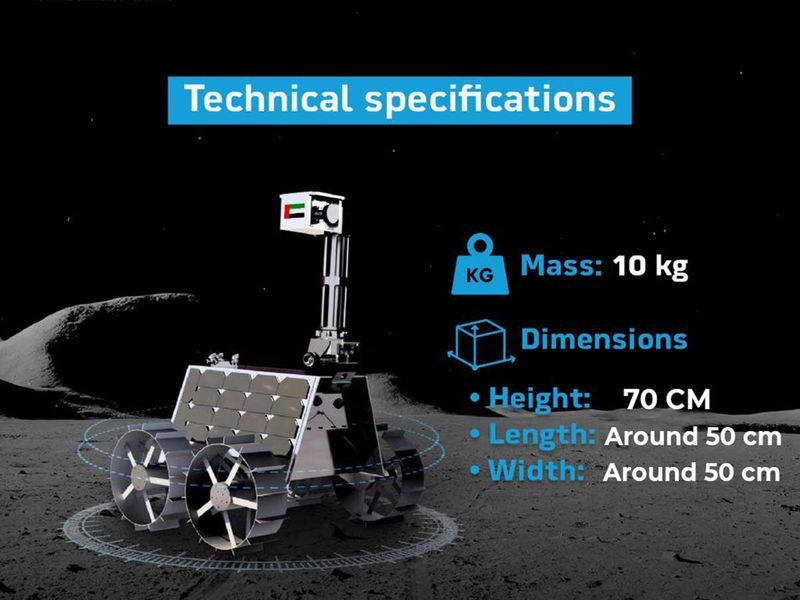
ELM is a lunar micro-rover mission that was originally scheduled for 2024 but will now launch in 2022 on a SpaceX Falcon 9 as part of the Japanese ispace Hakuto lander mission. Interestingly, ispace participated in the 2017 Canadian Space Summit where we interviewed Dr. Kazuya Yoshida, ispace CTO. ispace subsequently participated in a CSA industry day in the fall of 2019.
In a press release, Misson Control provided more detail about the mission saying “As a first for space exploration beyond low Earth orbit, this navigation computer installed as a payload on the ispace lander will host an AI application that harnesses deep-learning algorithms in an edge-computing architecture to recognize geological features in visual images as the rover drives around the lunar surface.”
“The outputs from the AI image classifier will be transmitted back to Earth for analysis by Mission Control and its academic partners at Concordia University, University of Winnipeg, Western University and Carleton University. These investigations will make use of the cloud-based Mission Control Software platform to enable the Canadian team to easily and securely access and visualize mission data.”
Canadensys and NGC Aerospace technology also headed to the Moon
While no new funding was announced for Canadensys and NGC Aerospace, the Minister and the CSA did use this opportunity to let their respective CEO’s speak about their technologies. Both companies had previously been awarded lunar contracts.
Canadensys “will test a lightweight and energy-efficient 360° camera that will capture stunning panoramic images of the lunar surface.” That camera and the technology has been selected for several future commercial missions headed to the Moon through NASA’s Commercial Lunar Payload Services (CLPS) program. Canadensys has receive several contracts in recent years for their lunar and Mars technology.

NGC Aerospace “will seek to demonstrate a planetary navigation system similar to the GPS technology used on Earth. The system will use features on the surface of the Moon to guide and support the landing of a lunar vehicle safely, in a precise location.” NGC received $250,000 in 2019 for this technology through the CSA’s Space Technology Development Program.

Canadian lunar rover mission delayed
When space agencies announce a date for missions they generally come with the caveat that the mission could be delayed. The reasons are varied and can include funding shortages, instrument issues and government dithering.
In today’s announcement it was mentioned that Canada would be sending a rover to the Moon within five years. That caught my attention as in 2019 when Canada’s lunar program was announced, and in particular, the Lunar Exploration Accelerator Program, a lunar over mission was to happen within five years. So Canada’s lunar rover mission is now delayed two years.
During the Q&A with journalists I asked CSA president Lisa Campbell about this Delay. Miss Campbell responded by saying; “I would say to you the timeline is aggressive as ever, but as you know, these are international partnerships.” It should be noted here that Canada is negotiating with the U.S. to send the rover on a future NASA CLPS mission. Without a deal in place there’s no actual launch date.
Campbell further stated that “we also need to make sure that we’re doing our due diligence that we’ve prepared the Canadian Space sector, and that there are companies out there who are ready to bid on this. So we did a request for interest to make sure that there was a sufficient industrial base to participate in this, there is, and soon you’ll see the competitive request for proposal (RFP) from which we intend to downselect to two bids to do some design and development and get ready to be on the Moon as soon as possible.”
Based on my discussions with companies wanting to send a rover the Moon, they are primed and ready to go. So now it seems we’re only waiting on the CSA RFP.
Updated 6:00 pm ET – We stated Canadensys was on “five future commercial rovers” when we should have said “several future commercial missions.”